How did West Broward’s iguanas endure the latest cold snap? Here’s the story
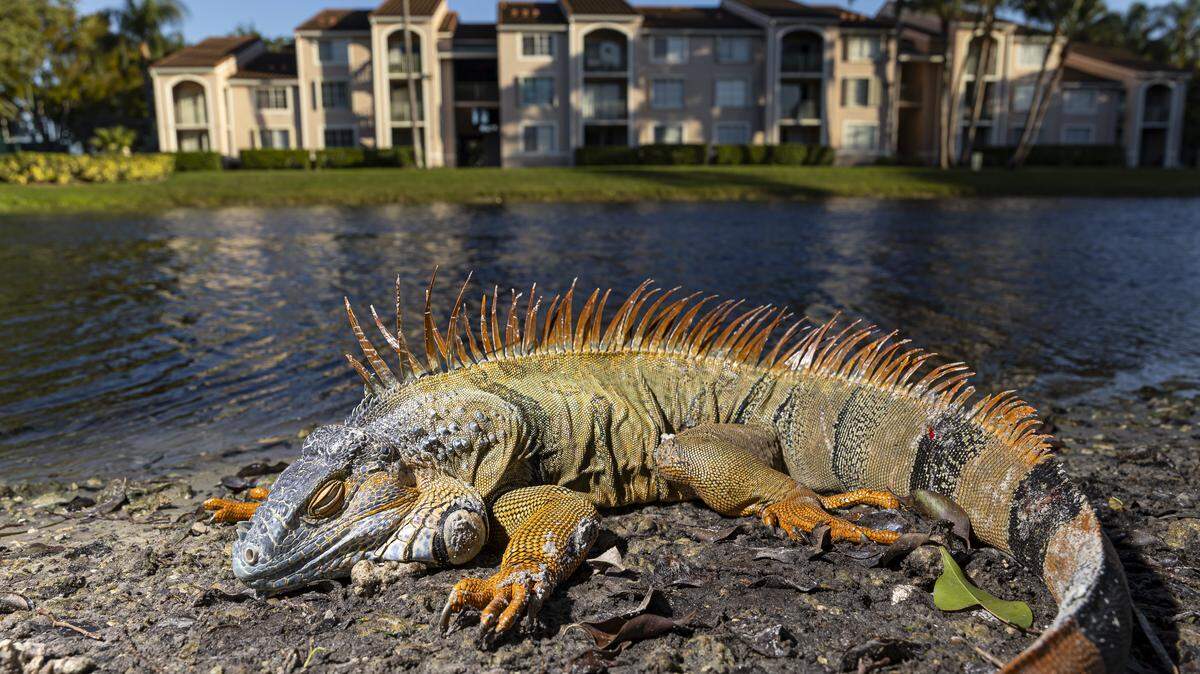
So, how did West Broward County’s iguanas withstand this latest cold snap?
Earlier this month, during a severe freeze, an estimated 5,195 frozen or dead iguanas were collected across Broward and Miami-Dade counties. Many were found dazed in Miramar, Pembroke Pines, Coral Springs and Davie, where trappers turned them in to the Florida Fish and Wildlife Conservation Commission.
So, did iguanas drop from trees, frozen by temperatures early Tuesday, Feb. 24?
It was a different story this time even though temperatues dipped as low as 43 degrees at 5:53 a.m. in Miramar, according to the National Weather Service.
“We found a few iguanas, but the ones that survived the last snap just laughed at this cold snap,” Blake Wilkins, owner of Redline Iguana Removal, joked to the Miramar News.
It makes sense that the hardy ones that survived would only grow stronger.
Iguanas are cold-blooded reptiles, meaning they rely on outside temperatures to regulate their body heat.
When temperatures fall into the 40s, they become sluggish. When it drops into the 30s or below, they can become immobilized and fall from trees — something South Floridians have seen during rare cold snaps.
The Feb. 1-2 Arctic blast turned West Broward into one of the chilliest regions in South Florida. Temperatures dipped into the low 30s and even the high 20s in some western sections.
The freeze triggered a surge in calls to iguana removal companies such as Wilkins’, particularly in Miramar and Pembroke Pines, where residents woke up to green and brown iguanas that were motionless in yards, parks and golf courses.
Wilkins said his crews began working before sunrise to take advantage of the cold-stunned reptiles.
“I would say we found the most iguanas in West Broward, where it got a little colder than on the east side of the county,” he told the Miramar News during the earlier cold snap.
At one Pembroke Pines golf course, trappers collected more than 100 incapacitated iguanas.
On Tuesday, Wilkins said only a handful of iguanas were collected, dazed by the cold.
As temperatures rebound, the surviving reptiles are expected to return to their usual routines — damaging landscaping, burrowing into seawalls and frustrating homeowners.